
Word of the Day: Mise en Abyme
Picture in a picture, infinite regression.

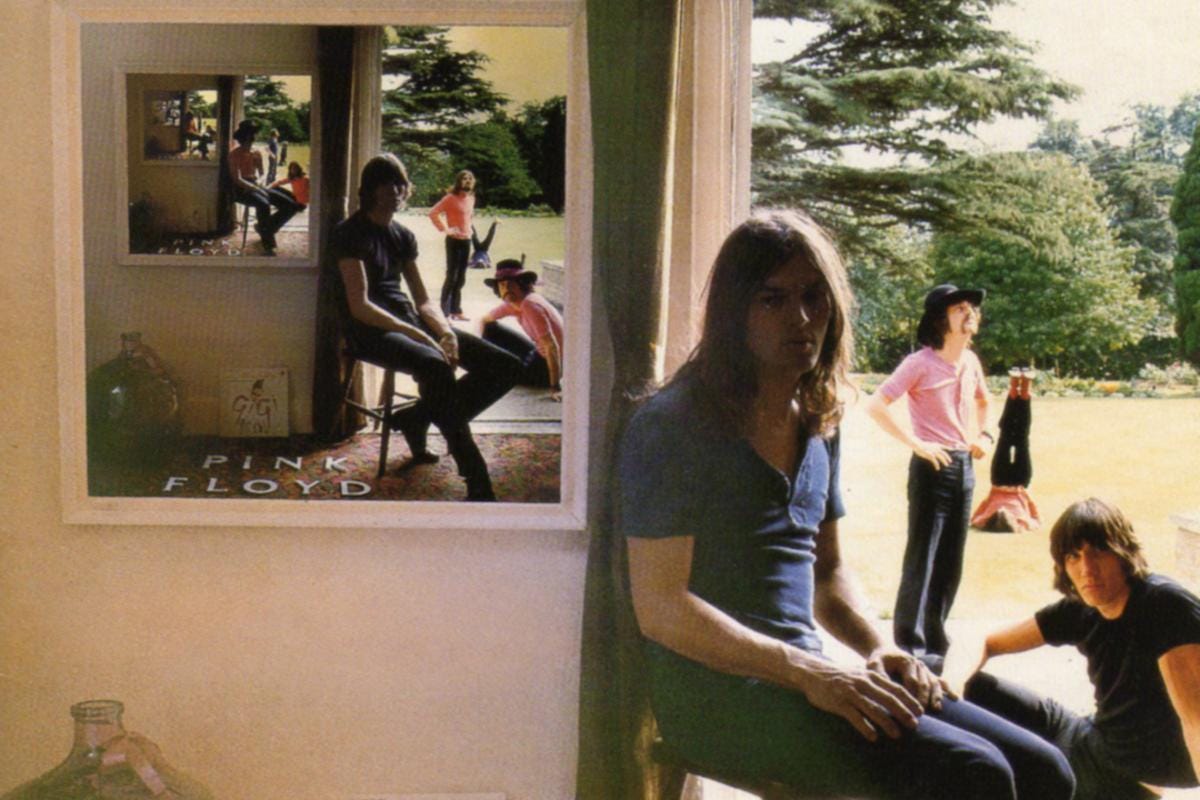
Mise en Abyme (or Mise en Abîme)
[French ‘placing into the abyss’]
1. The double-mirroring effect created by placing an image within an image and so on, repeating infinitely (infinite regression): for example, the album cover of Pink Floyd’s Ummagumma (1969). This is also known as Droste effect.
2. A reflexive strategy where the content of a medium is the medium itself: for example, Shakespeare’s Hamlet features a play within a play and Fellini’s 8½ (1963) is a film within a film. See also reflexivity.
3. A formal technique in Western art of placing a small copy of an image inside a larger one.
From: mise-en-abîme in A Dictionary of Media and Communication »
From the newshole:
There have been decades of debate ever since about what it means for a machine to “act” like it’s thinking. In the 1990s, cognitive scientist Stevan Harnad rephrased Turing’s rephrased question as “whether or not machines can do what thinkers like us can do,” but this hardly resolves the ambiguity. The whole point of Turing’s formulation was to sidestep the problem that we have no idea what thinking is. By defining “acting like thinking” as “doing what thinkers do” Harnad still leaves us nowhere.
To be clear, when Harnad writes about the Turing Test he is not trying to unravel the mystery of human consciousness. He aims rather to establish that the Turing Test is “serious . . . business,” not just a trick or deception: “No tricks! The real thing!” This is funny for a theater maker to read, because to us acting is neither a trick nor the real thing, but somehow also both, and often very serious business. When Harnad defends Turing’s honor by insisting that “The Turing Test is Not a Trick,” he falls right into the mise en abyme between doing and imitating.
| Annie Dorsen, The Theater of the Unreal
Note how they've played with the idea; each picture is different - a 'time scope'. :)
Wish I could add a second like just for the Ummagumma reference